Author: admin

  • Why Do We Always See the Same Side of the Moon?

    Why Do We Always See the Same Side of the Moon?

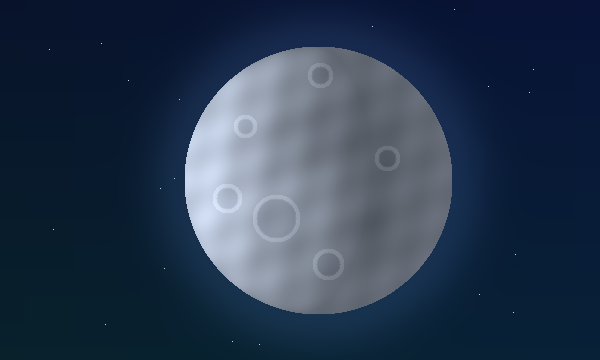
    The Moon seems wonderfully familiar. Its dark patches and bright highlands return night after night, month after month, as though someone has carefully kept the same face towards Earth. Is the Moon simply not spinning? Quite the opposite.

    Yes, the Moon rotates

    The Moon turns once on its axis in roughly 27.3 days. It also completes one orbit around Earth in roughly 27.3 days. Those two motions keep pace with one another. As a result, the same general lunar hemisphere faces our planet throughout each orbit.

    This arrangement is called synchronous rotation, a form of tidal locking. Imagine walking in a circle around a table while always facing its centre. To keep your face pointed at the table, you must gradually turn your body as you travel. By the time you’ve completed your circuit, you’ve also rotated once.

    Why did the Moon end up like that?

    Earth’s gravity exerts tidal forces on the Moon. Over a very long period, the resulting internal deformation and energy dissipation changed the Moon’s rotation until it became locked to its orbit. The phenomenon is not unique to our Moon; many large satellites elsewhere in the Solar System show synchronous rotation.

    The effect is a gravitational process, not a coincidence that just happened to line up two unrelated clocks.

    Does this mean half the Moon is permanently dark?

    No. The phrase “dark side of the Moon” is misleading. The far side receives sunlight just as the near side does. Its day and night change as the Moon orbits Earth. “Far side” is the more useful term because it describes what we cannot normally see from the ground.

    Spacecraft have photographed the far side in detail, revealing a landscape that looks quite different from the familiar face we see from Earth.

    There is also a slight wobble

    Although we see broadly the same lunar face, we don’t see precisely the same boundaries every night. A subtle apparent rocking motion, called libration, exposes slivers around the edges at different times. Across many observations, viewers on Earth can see about 59% of the Moon’s surface rather than exactly 50%.

    Look again at the next full Moon

    Pick out the broad darker regions, often called lunar maria, and check their positions in a photograph taken a month later. The Moon’s phase and orientation in your sky can vary, but that familiar pattern remains. What seems like stillness is actually beautifully synchronised motion.

    The takeaway: we see nearly the same lunar face precisely because the Moon rotates once for every orbit around Earth.

    Sources and further reading

    NASA Science: Tidal Locking
    NASA Science: Moon Viewing Tips
    NASA Science: Top Moon Questions

    Cover artwork is an illustration.
  • How Can a Damaged QR Code Still Work?

    How Can a Damaged QR Code Still Work?

    You’ve probably seen a QR code on a café table, a train ticket or a parcel. Some are creased, faded or partly hidden by a logo — yet your phone reads them instantly. That ability isn’t luck. It is an engineered feature.

    Those little squares carry more than the message

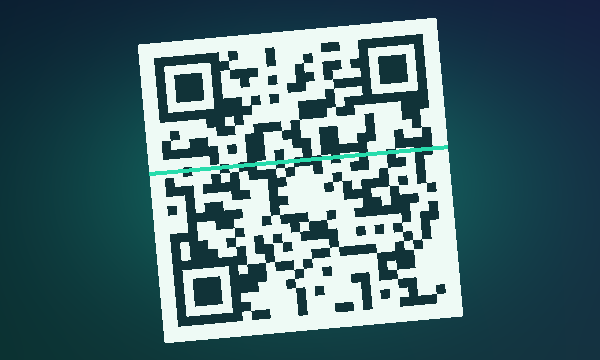
    Unlike a traditional one-dimensional barcode, a QR code stores information across a grid of dark and light squares. The square patterns in three corners help a scanner recognise where the code is, how it is oriented and how to interpret the grid. That’s one reason you can scan a QR code even when your phone is at an angle.

    But finding the code is only the first challenge. The scanner must also recover the information inside it, even if some of the grid has been obscured.

    The clever part is called error correction

    QR codes use a mathematical method known as Reed–Solomon error correction. In simple terms, the code includes extra information that allows a reader to reconstruct missing or damaged portions of the data. Imagine a message that carries enough additional clues for you to work out a few lost words.

    There are four standard QR correction levels: L, M, Q and H. They offer approximate codeword restoration capacities of 7%, 15%, 25% and 30% respectively. The higher the level, the more space is used for those protective clues, leaving less capacity for new information.

    Important: 30% does not mean you can safely remove any random third of the picture. It refers to the share of encoded codewords that can be recovered under suitable conditions. Covering a crucial detection pattern or introducing awkward distortion may still make a code unreadable.

    Why are there three big squares at the corners?

    Those are position-detection patterns. They give the scanning software a recognisable shape and help it determine orientation. Their placement makes fast reading possible from different angles. The surrounding light-coloured margin, often called the quiet zone, also matters because it separates the code from visual clutter.

    What about QR codes with logos in the middle?

    Designers sometimes place a small logo on a QR code and choose a stronger error-correction setting to tolerate the missing area. That can work, but it must be tested at realistic print sizes, distances and lighting conditions. A code that works perfectly on a bright monitor might fail on a crumpled label.

    The next time you scan one…

    Notice how quickly your phone finds the corners and reads the pattern, even if the code is slightly tilted. You’re watching pattern recognition and mathematical redundancy work together in a fraction of a second.

    The takeaway: QR codes are designed not just to store data, but to survive some damage. Their reliability comes from clever maths, not magic.

    Sources and further reading

    DENSO WAVE: Error Correction Feature
    DENSO WAVE: What Is a QR Code?

    Cover graphic is a conceptual illustration and is not intended to scan.

  • Why the Sky Is Blue but Sunsets Turn Red

    Why the Sky Is Blue but Sunsets Turn Red

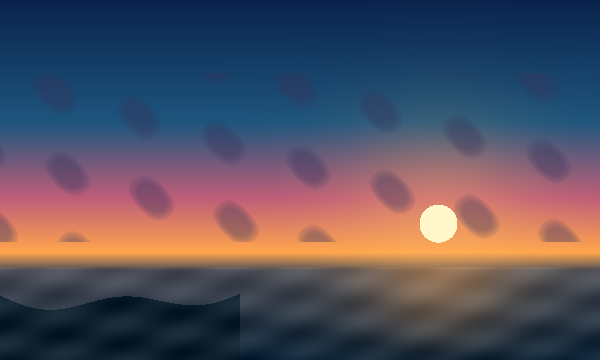
    Think about the last really good sunset you saw. The sky may have gone from pale blue to gold, orange and deep red in less than an hour. Nothing about the Sun itself changed colour. What changed was the journey its light took to reach your eyes.

    Sunlight isn’t actually one colour

    What looks like white sunlight is made up of many colours. Each has a different wavelength: blue and violet light have shorter wavelengths than red and orange light. When sunlight enters Earth’s atmosphere, it encounters tiny molecules of nitrogen and oxygen. Those molecules scatter shorter wavelengths much more efficiently than longer ones, a process called Rayleigh scattering.

    On a clear day, blue light is scattered across the sky from countless directions. When you look away from the Sun, that scattered light is what makes the sky appear blue. Violet scatters even more strongly, but our eyes are less sensitive to it and the sunlight we receive contains less violet.

    At sunset, sunlight takes the scenic route

    When the Sun is high in the sky, its light travels through a comparatively short stretch of atmosphere to reach you. As the Sun nears the horizon, that route becomes much longer. Much of the blue and violet light is scattered out of the direct beam before it reaches your eyes. More of the reds and oranges remain, which is why a low Sun can look warm and dramatic.

    The effect is not an optical illusion created by the sea or landscape. You can see it from a city window, a field or an aeroplane. The atmosphere is doing the work.

    Why are some sunsets far more dramatic than others?

    Clouds can catch the low-angle sunlight and reflect its warm colours, while dust, haze and other airborne particles alter how light is scattered. The effect is complicated: some particles can intensify colour, while thick pollution or cloud can simply block the view. A clear strip of sky near the western horizon with clouds higher up can be especially striking.

    There is a lovely twist: on Mars, fine atmospheric dust can produce a bluish glow close to the setting Sun. So the familiar Earth sunset isn’t a universal rule for every planet.

    A small experiment for the next clear evening

    Look directly overhead while the Sun is still reasonably high, then compare that blue with the lighter colour near the horizon. As sunset approaches, watch the sky close to the Sun change colour while the upper sky remains blue. You are seeing the same physics from two different viewing directions.

    The takeaway: the Sun is not changing colour. Earth’s atmosphere is sorting its light on the way to us.

    Sources and further reading

    NASA Space Place: Why Is the Sky Blue?
    US National Weather Service: Why Is the Sky Blue?

    Cover artwork is an illustration, not a documentary photograph.