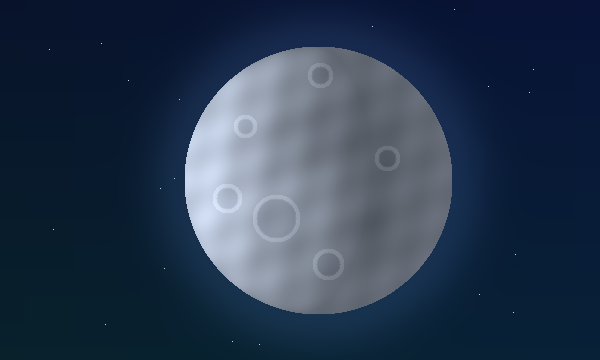
The Moon seems wonderfully familiar. Its dark patches and bright highlands return night after night, month after month, as though someone has carefully kept the same face towards Earth. Is the Moon simply not spinning? Quite the opposite.
Yes, the Moon rotates
The Moon turns once on its axis in roughly 27.3 days. It also completes one orbit around Earth in roughly 27.3 days. Those two motions keep pace with one another. As a result, the same general lunar hemisphere faces our planet throughout each orbit.
This arrangement is called synchronous rotation, a form of tidal locking. Imagine walking in a circle around a table while always facing its centre. To keep your face pointed at the table, you must gradually turn your body as you travel. By the time you’ve completed your circuit, you’ve also rotated once.
Why did the Moon end up like that?
Earth’s gravity exerts tidal forces on the Moon. Over a very long period, the resulting internal deformation and energy dissipation changed the Moon’s rotation until it became locked to its orbit. The phenomenon is not unique to our Moon; many large satellites elsewhere in the Solar System show synchronous rotation.
The effect is a gravitational process, not a coincidence that just happened to line up two unrelated clocks.
Does this mean half the Moon is permanently dark?
No. The phrase “dark side of the Moon” is misleading. The far side receives sunlight just as the near side does. Its day and night change as the Moon orbits Earth. “Far side” is the more useful term because it describes what we cannot normally see from the ground.
Spacecraft have photographed the far side in detail, revealing a landscape that looks quite different from the familiar face we see from Earth.
There is also a slight wobble
Although we see broadly the same lunar face, we don’t see precisely the same boundaries every night. A subtle apparent rocking motion, called libration, exposes slivers around the edges at different times. Across many observations, viewers on Earth can see about 59% of the Moon’s surface rather than exactly 50%.
Look again at the next full Moon
Pick out the broad darker regions, often called lunar maria, and check their positions in a photograph taken a month later. The Moon’s phase and orientation in your sky can vary, but that familiar pattern remains. What seems like stillness is actually beautifully synchronised motion.
The takeaway: we see nearly the same lunar face precisely because the Moon rotates once for every orbit around Earth.
Sources and further reading
NASA Science: Tidal Locking
NASA Science: Moon Viewing Tips
NASA Science: Top Moon Questions
Cover artwork is an illustration.
Leave a Reply